What is Osteopathy?
So why do you need an osteopath if the body is self-healing?
Sometimes you take your body into extremes (too much lifting and twisting, too many hours slouching at a computer, too much force in that football tackle or car accident) and then the body finds it difficult to make the necessary correction on its own. Your osteopath can diagnose the problem and help you and your body to recover.
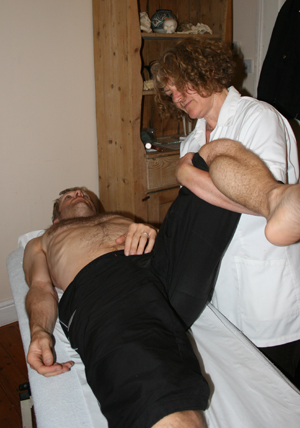
Osteopathy addresses physical strains and injuries, using a wide range of gentle yet effective techniques from cranial osteopathy to mobilisation and more robust techniques such as joint manipulation. Both cranial and structural osteopathy use the same osteopathic principles.
By working on the body's joints and soft tissues, we can also have an effect on the central nervous system (the control centre for the whole body) and indeed the whole person, because we recognise the relationship between body, mind and emotions.
"Relaxing…improved mobility in joints, given me the freedom to carry on with all my sporting activities (cycling) and helped me recover from my injuries".
A Harrison, Patient
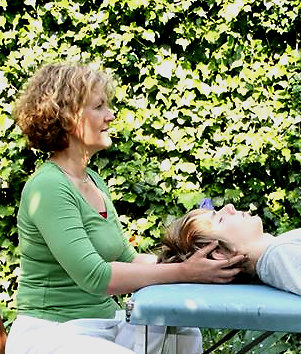
Cranial Osteopathy is a much more subtle approach but again works with the body's remarkable ability to self correct. Despite the word ‘cranial’ this technique applies to the whole body.
Osteopathy is an extremely effective yet gentle approach and may be used in a wide range of conditions for people of all ages. (See What can osteopaths treat?).
"The treatment offers a quiet place and space to allow renewal."
C Turchiarelli, Patient